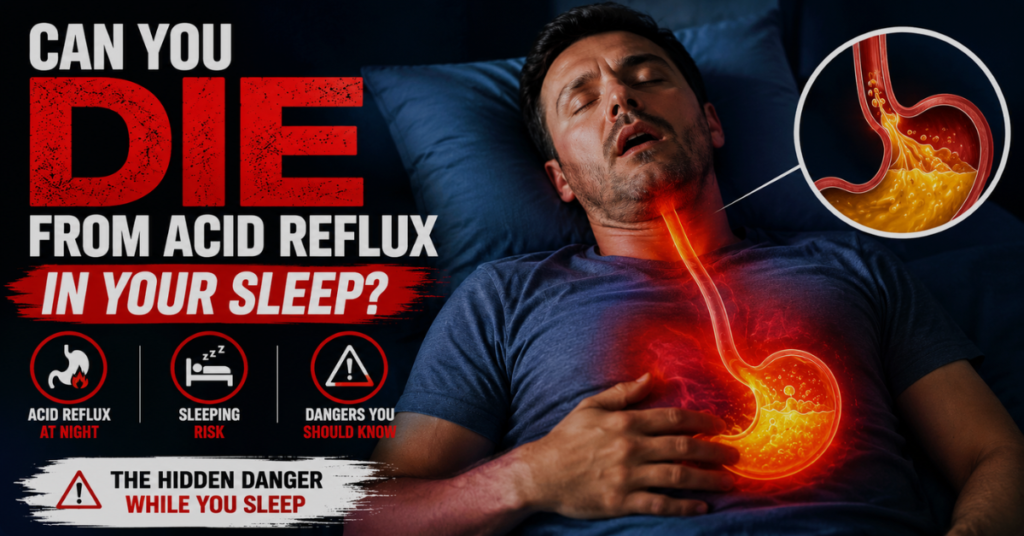
Can you die from acid reflux in your sleep? For almost everyone, no. Reflux itself does not stop your heart or your breathing. The danger comes from what reflux can trigger: choking, acid entering your lungs, or years of silent damage to your esophagus.
Your risk climbs at night because lying flat lets stomach acid travel upward more easily. Your body also swallows less and makes less saliva while you sleep, so acid sits in your esophagus longer. The fix is straightforward: treat the reflux, protect your airway, and know which symptoms mean you need help right away.
What Happens in Your Body During Nighttime Reflux
Your esophagus is the tube that carries food from your throat to your stomach. At the bottom sits the lower esophageal sphincter, a ring of muscle that works like a one-way valve.
When this valve is working correctly, it closes after food passes through. It keeps stomach acid where it belongs. When it weakens or opens at the wrong time, acid moves backward into your esophagus. That backward flow is acid reflux.
Occasional reflux after a big meal is normal. Gastroesophageal reflux disease, or GERD, is what doctors call it once reflux happens two or more times a week, or once it starts damaging your esophagus.
Why Acid Reflux at Night Is Worse Than During the Day
Three things change while you sleep, and all three work against you.
- Gravity stops helping. While you’re upright, gravity pulls stomach acid down. Lying flat removes that advantage, so acid reaches your esophagus more easily.
- You swallow less. Swallowing normally pushes acid back down into your stomach. Your swallowing reflex slows dramatically during sleep.
- Saliva production drops. Saliva neutralizes acid during the day. Your mouth makes far less of it at night, so acid lingers longer in your esophagus.
Together, these changes mean nighttime reflux exposes your esophagus to acid for longer stretches than daytime reflux does. That longer exposure is why nighttime symptoms often feel more severe and why chronic acid damage tends to build up while you sleep.
So, Can You Die From Acid Reflux in Your Sleep?
Direct death from acid reflux in your sleep is rare. Your body has built-in defenses against it. When acid reaches your throat, your vocal cords can slam shut to protect your lungs. Doctors call this laryngospasm. Most people cough, gag, or wake up before real harm occurs.
The danger rises sharply in specific situations. If you have a weakened swallowing reflex, a neurological condition like stroke or Parkinson’s, or you’re sedated by alcohol or medication, that protective reflex may not fire in time. Acid or food can then travel into your airway instead of triggering a cough.
That process is called aspiration, and it’s the mechanism behind the rare but real cases in which nighttime reflux becomes dangerous.
The Real Danger: Aspiration and Aspiration Pneumonia
Aspiration pneumonia happens when stomach acid or food particles get inhaled into your lungs. Your lungs aren’t built to handle acid. It can burn lung tissue and let bacteria take hold, causing infection.
A national review of death records found aspiration pneumonia listed as the underlying cause of death in an average of about 17,600 cases a year in the United States. Deaths were heavily concentrated in adults age 75 and older, and in people with neurological, lung, or upper digestive conditions.
That risk is not evenly spread. It’s important to separate two very different situations:
- A healthy adult with occasional heartburn has a very low chance of ever developing aspiration pneumonia from reflux.
- An older adult with GERD, sleep apnea, or a swallowing disorder faces meaningfully higher odds, especially if reflux goes untreated for years.
This is why doctors take chronic nighttime reflux seriously even when a single episode feels minor.
Long-Term Risks: Barrett’s Esophagus and Esophageal Cancer
Choking isn’t the only long-term concern. Repeated acid exposure can slowly change the lining of your esophagus.
Years of chronic acid exposure can lead to Barrett’s esophagus, a condition where normal esophageal tissue is replaced by tissue that resembles your intestinal lining. According to American College of Gastroenterology guidelines, people with a GERD diagnosis have roughly a 10 to 15 percent chance of developing Barrett’s esophagus.
Barrett’s esophagus itself is not cancer. It does raise your risk. Research generally puts the annual chance of Barrett’s progressing to esophageal cancer somewhere under 1 percent per year for people without abnormal cell changes, known as dysplasia. That risk climbs substantially once dysplasia is found, which is exactly why doctors recommend monitoring, not panic, once Barrett’s is diagnosed.
Chronic acid exposure can also cause esophageal strictures, a narrowing caused by scar tissue, along with ulcers that bleed. Both cause real symptoms, and both are treatable when caught early.
Ordinary Reflux vs. a Medical Emergency
Most nighttime reflux is uncomfortable, not dangerous. A small number of symptoms cross the line into an emergency. This table draws that line clearly, because reflux and a heart attack can feel similar in the chest.
| Symptom | Usually Reflux | Seek Emergency Care |
|---|---|---|
| Burning behind the breastbone | Common, often after eating | Combined with sweating, nausea, or arm/jaw pain |
| Sour taste or regurgitation | Typical reflux symptom | Not applicable on its own |
| Brief coughing or throat clearing | Common at night | Persistent choking you can’t stop |
| Chest discomfort that eases when you sit up | Typical of reflux | Chest pain that does not improve with position change |
| Occasional hoarseness | Common with reflux | Sudden severe trouble breathing |
| Mild breathlessness after a coughing fit | Can happen with reflux | Blue lips, confusion, or fainting |
If anything in the right-hand column applies to you, call emergency services. Don’t assume it’s reflux.
What to Do If You Wake Up Choking on Acid Reflux
A reflux episode that reaches your throat can feel frightening. Here’s what to do in the moment.
- Sit up immediately. This lets gravity pull acid back down and helps clear your airway.
- Stay calm. Panic tightens your throat muscles and can make swallowing harder.
- Sip a small amount of water. This helps rinse acid out of your throat and esophagus.
- Stay upright for 30 to 60 minutes. Lying back down too soon lets acid rise again.
- Call for help if breathing doesn’t improve. Ongoing choking, wheezing, or chest pain needs medical attention right away.
If this happens more than once, it’s a signal that your GERD needs better control, not just better emergency response.
Who Faces Higher Risk From Nighttime Reflux
Reflux complications aren’t random. A short list of risk factors makes both choking and aspiration pneumonia more likely.
- Obesity, which increases pressure on your stomach
- A hiatal hernia, where part of your stomach pushes through your diaphragm
- Heavy alcohol use, which relaxes the lower esophageal sphincter
- Smoking, which weakens the same muscle and irritates your airway
- Sleep apnea or other sleep disorders
- Neurological conditions such as stroke, dementia, or Parkinson’s disease
- Sedating medications that dull your normal cough and swallow reflexes
- Pregnancy, due to hormonal changes and added abdominal pressure
If two or more of these apply to you, treat chronic nighttime reflux as a priority, not a minor annoyance.
How to Prevent Nighttime Acid Reflux
Most people can bring nighttime reflux under control with a handful of consistent lifestyle changes.
- Elevate the head of your bed by 6 to 8 inches, or use a wedge pillow. Stacking regular pillows tends to bend you at the waist instead of raising your upper body, so it works less well.
- Stop eating 2 to 3 hours before bed. This gives your stomach time to empty before you lie down.
- Sleep on your left side. Because of how your stomach is shaped, this position keeps acid lower than sleeping on your back or right side does.
- Maintain a healthy weight. Extra abdominal weight pushes upward on your stomach and worsens reflux.
- Limit trigger foods and drinks, including alcohol, caffeine, chocolate, mint, citrus, and fried or spicy meals, especially in the evening.
- Cut back on smoking, since it weakens the lower esophageal sphincter over time.
Sleep Position and Reflux Risk
| Position | Effect on Reflux |
|---|---|
| Left side | Best position; stomach anatomy keeps acid away from the esophageal opening |
| Head elevated 6-8 inches | Uses gravity to keep acid down; works well combined with left-side sleeping |
| Flat on your back | Removes gravity’s protection; acid travels upward more easily |
| Right side | Can worsen reflux for some people, based on stomach positioning |
When to See a Doctor
Book an appointment if you notice any of these patterns:
- Heartburn or regurgitation more than twice a week
- Reflux that regularly wakes you from sleep
- Difficulty swallowing, or food feeling stuck in your throat
- Chronic cough, hoarseness, or a sore throat with no clear cause
- Unexplained weight loss
- Vomiting blood or noticing black, tar-like stools
A doctor can rule out complications like ulcers, strictures, or Barrett’s esophagus before they progress. Most GERD responds well to a combination of lifestyle changes, medication such as proton pump inhibitors, and, in severe cases, procedures that reinforce the lower esophageal sphincter.
Bottom Line
So, can you die from acid reflux in your sleep? Rarely directly. Your real focus should be controlling GERD and protecting your airway, since that’s what keeps the rare but serious complications from ever becoming a concern.
Frequently Asked Questions
Can you die from acid reflux in your sleep?
Direct death from acid reflux in your sleep is very rare. The real risk comes from complications like choking, aspiration pneumonia, or, over many years, esophageal cancer linked to untreated GERD.
What are the warning signs of dangerous nighttime reflux?
Watch for chest pain that doesn’t ease when you sit up, trouble breathing, repeated choking episodes, vomiting blood, or unexplained weight loss. Any of these needs prompt medical evaluation.
Can GERD cause choking during sleep?
\Yes. When acid reaches your throat, it can trigger coughing, gagging, or brief choking. Your airway usually protects itself automatically, but repeated episodes point to reflux that needs treatment.
Does sleeping on your left side really help acid reflux?
Yes. Because of how your stomach sits in your body, left-side sleeping keeps stomach contents away from the opening into your esophagus, which reduces reflux compared to sleeping flat on your back.
How common is death from aspiration pneumonia linked to reflux?
Aspiration pneumonia from any cause is linked to an average of about 17,600 deaths a year in the United States, concentrated heavily in older adults with other health conditions. GERD is one contributing factor among several, not the sole cause in most of these cases.

Brenna D Brenna is a content writer with a passion for turning complex topics into clear, engaging reads. She brings a thoughtful, research-driven approach to every article, helping readers find practical answers to their everyday questions.