

Have you ever wondered why your cat ends up sleeping right at your feet every single night? It happens more often than most cat owners realize. This quiet habit says a lot about your cat and your bond. Cats are not random about where they sleep. Every spot they pick carries meaning. When a cat sleeps at your feet, it is actually sending a clear message.
Understanding this behavior helps owners respond better. It also deepens the relationship between a cat and their human. Read on to find out what is really going on.
Why Cats Sleep at Your Feet: The Simple Truth
Cats sleep at your feet for many layered reasons. These reasons are rooted in instinct, comfort, and trust. Most of the time, it is a very good sign. Your cat is not just looking for a warm spot. It is also looking for a connection. Sleeping near you is one way cats show they feel safe.
Security and Survival Instinct
Cats are both predators and prey in the wild. Sleeping leaves them vulnerable. So cats choose sleeping spots carefully, even in a home. Sleeping at the foot of the bed gives a cat a quick escape route. If something startles them, they can move fast. This instinct stays strong even in safe homes. At the same time, staying close to their human feels protective. Your cat trusts you enough to sleep nearby. That is not a small thing for a cat.
Seeking Warmth From Your Body
Cats love warmth more than most animals. Their ideal body temperature is higher than a human’s. So they are always looking for warm spots to sleep on. Your feet give off steady heat throughout the night. For a cat, sleeping on or near your feet is like having a personal heater. It keeps them comfortable without overheating.
This is especially true during cold seasons. When temperatures drop, your cat may press closer to your feet. Seasonal warmth needs to explain many nighttime habits.
What This Sleeping Spot Says About Your Cat
Where your cat sleeps tells a story. The foot of the bed is a specific and meaningful choice. It reflects a lot about your cat’s personality.
A Sign of Trust and Moderate Bonding
A cat sleeping near your head is a very intimate gesture. Sleeping by your feet is slightly less intense but still deeply loving. It means your cat trusts you while keeping some independence. Some cats are not the cuddly type. They love you but prefer their own space. Sleeping at the end of the bed is their perfect balance.
This sleeping pattern often signals a strong but respectful bond. Your cat is saying it loves you from a comfortable distance. That is a healthy and normal type of feline affection.
Territorial Marking Through Scent
Cats have scent glands in their paws. When your cat sleeps near you, it is also marking you. This scent-based behavior is a form of claiming and belonging. In multi-cat homes, sleeping at your feet is even more significant. Your cat is signaling to others that you belong to it. It is a quiet but firm territorial statement.
Cats choose their spots deliberately. When your cat chooses your feet, it is declaring primary affiliation with you. This behavior is natural and shows emotional connection.
Your Cat Might Be Guarding You
Some cats position themselves at the foot of the bed with intention. They may be watching over you while you sleep. This protective behavior is surprisingly common in cats. Cats sleep lightly and wake up at small sounds. Sleeping near the bed’s edge puts them on alert. They can respond quickly if they sense any threat.
This guardian role shows emotional investment. Your cat is not just resting. It is choosing to stay near you for a reason.
When to Pay Attention to This Habit
Most of the time, cats sleeping near your feet is perfectly normal. But sometimes a sudden change in sleeping habits is worth noticing. Knowing the difference is important for your cat’s health.
Aging Cats and Mobility Changes
If your cat is older and suddenly sleeps at your feet more often, take note. Aging can affect a cat’s mobility and comfort. Older cats may seek lower, easier sleeping spots.
Senior cats may also want more reassurance from sleeping near you. They often become more dependent on their humans as they age. This is a normal part of the aging process for cats.
Watching for Health Concerns
Watch for other signs if sleeping habits change suddenly. Look for changes in appetite, lethargy, or unusual behavior. These, paired with new sleeping habits, may need a vet visit. If your cat sleeps more than usual or looks uncomfortable, act. A vet can rule out pain or illness. Early attention often makes treatment much easier.
Territorial Stress and Household Changes
New pets, new people, or rearranged spaces can stress a cat. When stressed, some cats may sleep closer to their trusted human. This is their way of coping with change.
If your cat is sleeping near you more after a household shift, give it patience. Provide stability and routine to help them adjust. Your calm presence helps more than you know.
Why Some Cats Attack Your Feet While Sleeping
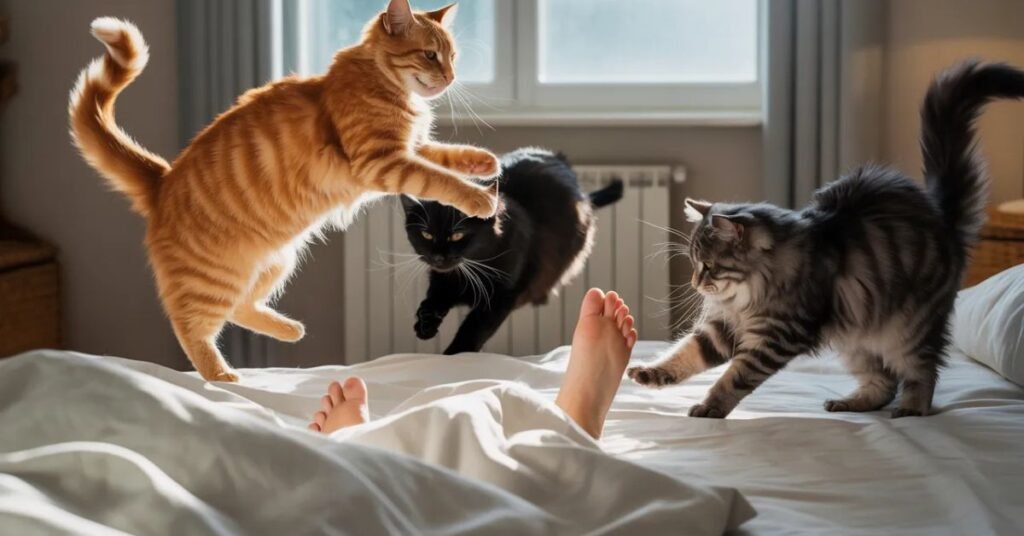
Some cat owners deal with a very different problem. Their cat does not just sleep at their feet. It attacks them in the middle of the night. This is almost always rooted in play-hunting instincts. Cats are natural hunters, and moving feet look like prey. It is frustrating but very explainable.
High-energy cats are more likely to do this. If a cat has not burned enough energy during the day, it will release it at night. The result is a pounce on unsuspecting feet. Beyond the disruption itself, owners should know that repeated nighttime awakenings, even from a playful cat, chip away at the deep and REM stages that make sleep truly restorative. To understand exactly what is at stake, it helps to read about what core sleep is and why those stages matter.
Practical Solutions for a Better Night’s Sleep
There are simple, effective ways to handle nighttime disruptions. The goal is not to punish your cat. It is to redirect their energy and sleeping habits.
Play More During the Day
Tiring your cat out before bed helps significantly. More daytime play means less nighttime chaos. Use wand toys and interactive games to use up their energy.
A good 15-minute play session before bed works well. It mimics the hunt and tires them out naturally. After this, most cats are ready to sleep on their own.
Give Your Cat a Dedicated Sleeping Spot
Give your cat a warm, cozy bed of their own. Place it near your bed so they still feel close to you. This can draw them away from sleeping directly on your feet. For senior cats, consider an orthopedic bed with bolsters or a ramp. This supports aging joints and makes sleeping more comfortable. A heated cat bed also works well in colder months.
Keep their sleeping space clean and in a quiet spot. Cats prefer calm, familiar environments for their sleeping. A consistent spot builds a strong new habit over time.
Set Boundaries Without Isolation
If nighttime attacks are a problem, boundaries are helpful. A high-pitched yelp when attacked mimics what a littermate would do. Cats respond to this as a sign they went too far. Closing the bedroom door is also an option. Make sure there are cozy alternatives placed throughout your home. You and your cat can both get better sleep this way.
When to Consult a Vet or Cat Behaviorist
Most cats sleeping near your feet is healthy and sweet. But if other worrying symptoms appear, seek professional advice. A vet or behaviorist can offer real clarity. If your cat sleeps excessively and shows appetite loss, call your vet soon. If destructive behavior or anxiety grows alongside the habit, a behaviorist helps. Both professionals can guide you and your cat to better health.
The Quiet Bond Between You and Your Cat
You and your cat share something real when they sleep near you. It is a silent form of love and trust. Not every cat shows affection loudly. Cats like to sleep near the people they feel safe with. If your cat sleeps at your feet, you are that person for them. That is worth appreciating.
Some cats have slept at the feet of their owners for their whole lives. It becomes part of the nighttime routine. It is one of those small joys that make having a cat so special.
Final Thoughts
Cats sleep at your feet for many good reasons. Warmth, safety, love, and instinct all play a role. Understanding this helps owners see their cat more clearly. If you have ever wondered why your cat picks this spot, now you know. It is not random. It is a meaningful choice that reflects how your cat feels about you.
Watch where your cat sleeps. Listen to what that behavior says. That quiet spot at your feet might just be one of the biggest compliments your cat can give.
Frequently Asked Questions
Cat sleeping habits raise a lot of questions for owners. Below are some of the most common reasons people ask about why a cat sleeps in certain spots. Each answer gives a clear and honest look at what the behavior really means
What does it mean when a cat sleeps at your feet?
When a cat sleeps at your feet, it is showing trust, affection, and a need for warmth. It is also a way for your cat to stay close while keeping a comfortable level of independence.
Where your cat sleeps on the bed, and what does it mean?
Where your cat sleeps on the bed reveals a lot about your bond and their personality. Sleeping near your head signals deep trust, while sleeping at the foot of the bed shows affection with a preference for personal space.
Why does my cat only sleep at my feet and not anyone else’s?
Your cat has chosen you as its primary source of comfort and safety. Cats are selective, and sleeping near a specific person means that person is their most trusted companion in the home.
Is it okay to let a cat sleep at your feet every night?
Yes, it is perfectly fine for a cat to sleep at your feet each night as long as it does not disturb your rest. If your sleep is being affected, providing a dedicated cat bed nearby is a great solution.
Why does my cat sleep at my feet but attack them sometimes?
This happens because cats are natural hunters, and moving feet can trigger their play-hunting instinct. More interactive play during the day helps redirect this energy before bedtime.
Should a cat sleeping at your feet change after bringing home a new pet?
Some cats sleep closer to their owner when a new pet arrives because they feel stressed or territorial. This usually settles down once your cat adjusts to the change in the home.

Brenna D Brenna is a content writer with a passion for turning complex topics into clear, engaging reads. She brings a thoughtful, research-driven approach to every article, helping readers find practical answers to their everyday questions.